
Case Study
CUSTOMER:
Trican
LOCATION:
Canada
PRODUCTS:
SPM EdgeX Valve & Carbide Seat
INDUSTRY:
Oil & Gas
APPLICATION:
Well Services
CHALLENGE:
Extreme cold temperatures, high pressures, and elevated proppant volumes were accelerating wear on conventional valve seats—driving frequent maintenance, increased nonproductive time (NPT), and safety risks during winter fracturing operations.
SOLUTION:
SPM valve and carbide seats delivered extended durability in harsh conditions, running 515 hours—more than “6x” longer than conventional seats—even at –20°C and 12,500psi. The increased seat life drastically reduced on-site seat pulls, reduced maintenance demands, and improved pump utilization across multi‑well pad operations.
Trican Well Service Ltd., an oilfield services provider in Western Canada subjects its frac equipment to some of the most challenging conditions found in the industry. Trican routinely pumps high volumes of proppant at pressures up to 12,500 psi during harsh winter operations. Standard seats typically have an average life of 80 hours. During a three-month field follow with the SPM valve and carbide seat, the engineered seats ran a record-breaking 515 hours—a 540% increase compared to previous seats—dramatically increasing safety and uptime.
The Montney and Duvernay plays in Canada subject hydraulic fracturing equipment to some of the most challengingfracking environments there are due to high pressures, high proppant volumes and the extremely cold temperatures, which can range from -5°C to -40°C (23 to -40°F) in the winter. These unforgiving conditions can prevent the use of less durable frac equipment and components.
Trican Well Service Ltd. operates pumps in both shale plays and wanted to carve out greater efficiencies to further streamline their multi-well pad operations and reduce NPT. Pulling valves and seats is the most labor-intensive part of fluid-end maintenance, increasing NPT when fluid ends are offline. While 80 hours is a typical life span, Trican was eager to extend maintenance intervals and wanted to eliminate seat replacement and maintenance on the pad.
Pumping 2°C (36°F) water in -20°C (-4°F) weather has been known to cause tungsten carbide fluid end seats to become brittle or shatter, increasing parts and labor costs. Additionally, Trican was pumping 5,000 tons of sand rather than the typical 1,200-1,400 tons of sand used in offset wells, subjecting their seats to significantly more erosion.
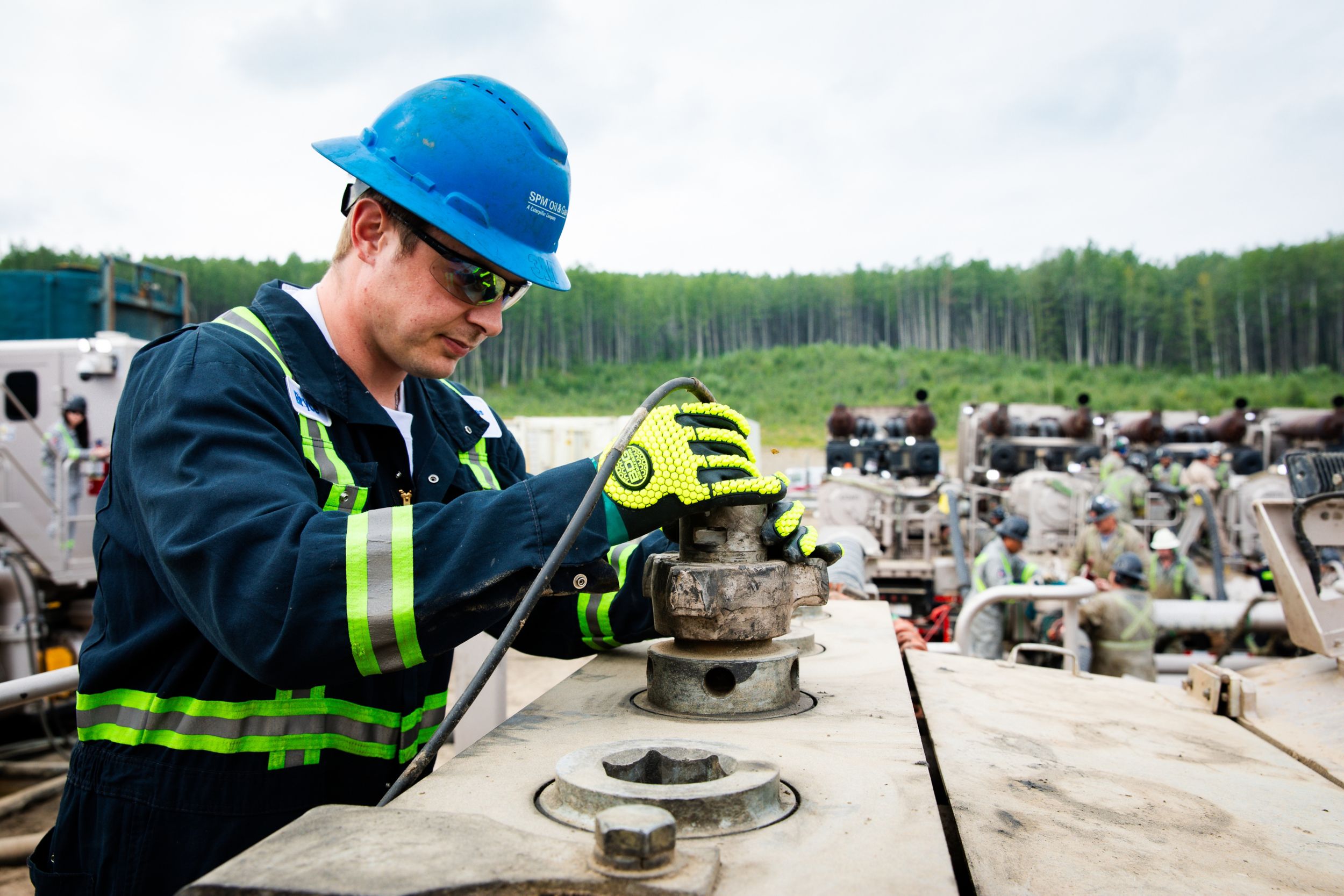
SPM conducted a three-month field demonstration with Trican Well Service Ltd., monitoring the carbide seats and tracking their performance against competitors on a single pump. The frac sites where the test took place had operating conditions as follows: 12,500 psi, 5,000 tons of sand/stage, produced water, 100 bpm, and temperatures well below freezing (-20°C I -4°F). The SPM service team was always on call and supervised the test, regularly checking seats at maintenance intervals and comparing them for wear.
The field demonstration produced dramatic results for the SPM oilfield customer. Unlike tungsten carbide seats, which can become brittle or shatter due to cold weather, SPM carbide seats saw no performance impact due to the cold temperatures and lasted 6x longer than the previous seats.
Trican Well Service Ltd. ran the SPM carbide seats a record-breaking 515 hours compared to the 80-hour average of conventional seats—increasing seat life approximately 540%.
Based on this successful field trial, Trican Well Service Ltd. ordered the carbide seats to outfit their fleets, leading to longer pump time and reduced maintenance intervals.
SPM carbide seats offer greater resistance to wear, cracking and washout, even with large particles. It fits any standard taper fluid end and helps eliminate sensitivity to installation errors due to its strategic design and placement of tungsten carbide and steel. Designed with field maintenance in mind, it is pulled and seated in the fluid end the same way as a standard legacy seat—requiring no special tools or special installation procedures.
Engineered with the nuances of the entire frac site in mind, the SPM carbide seat enables operators to push their frac fleets harder while reducing maintenance time and costs for valves and seats.